
Company: Commit Global
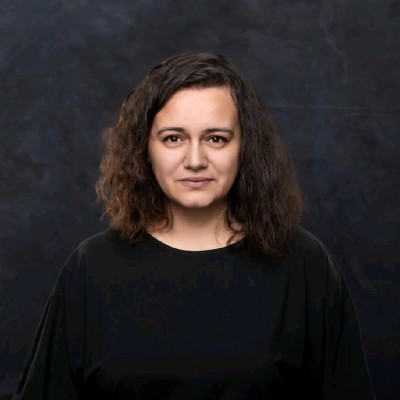
Interviewee: Olivia Vereha, Co-Founder & Director of Product
Website: https://www.commitglobal.org/en
Scaling Open Humanitarian Tech with Design for Dignity
From Code to Crisis Zones
When a crisis strikes—whether at the borders of Europe, in the Middle East, or Central America—Commit Global is often already there, quietly deploying open digital tools that power the backbone of humanitarian response. But this is not your average tech company. Commit Global is a nonprofit, international NGO with a mission to build and sustain free, open-source digital infrastructure tailored for civil society and humanitarian actors.
Founded nine years ago in Romania, the organization has evolved into a field-tested team of developers, designers, and humanitarians who work hand-in-hand with shelters, emergency units, and local NGOs. Their software is not built for profit—it’s built to save time, protect people, and make sure that scarce resources go further in times of need.
Designing for the Front Lines
Olivia Vereha, Commit Global’s Co-Founder and Director of Product, explains their approach with clarity: “We’re not just building systems. We’re designing for the people who need them most—often under extreme pressure, in chaotic or dangerous situations.” The result is a new kind of profession they’re helping to define: the humanitarian designer.
This concept is central to everything Commit Global creates. Their tools—like shelter management systems, beneficiary registries, or content platforms for migrants—are shaped by deep contextual research. “Our users aren’t working at desks in climate-controlled offices,” Olivia notes. “They’re often in noisy, temporary environments, under stress, juggling dozens of tasks. That context shapes every design decision we make.”
“We’re not just building systems. We’re designing for the people who need them most—often under extreme pressure, in chaotic or dangerous situations.”
Infrastructure with Integrity
From Lebanon to Tijuana, Commit’s fieldwork begins the same way: mapping the actors already working in a humanitarian space, coordinating with them directly, and identifying what’s truly needed. In Tijuana, for example, the team onboarded over 20 shelters in just two weeks, deploying shelter management systems and tools for internal reporting—all connected to a centralized, privacy-respecting hub built with the IOM.
What makes Commit Global’s infrastructure remarkable isn’t just its functionality—it’s the philosophy behind it. Everything is open source. Everything is designed to be scalable, replicable, and ethically sound. Whether you’re a one-person NGO on the border of Moldova or a large UN agency, you get the same level of support, security, and respect.
Ethics by Default and On the Ground, Not Just by Design
This ethical backbone includes privacy by design, user autonomy, and an uncompromising stance against digital exploitation. For Commit, “do no harm” isn’t just a design goal—it’s a moral imperative. “We train shelters to use fake names or codes for particularly vulnerable people,” Olivia shares. “We make sure our systems restrict access to personal data on a need-to-know basis. Even if our users aren’t focused on privacy, we are. That’s part of our responsibility.”
Commit’s tools are already proving their worth on the ground. One powerful example? In Tijuana, a shelter worker who couldn’t write by hand was manually copying registration info into Excel each night. Commit’s new system allowed him to do everything directly—faster, safer, and more independently. “That feeling of autonomy—it’s everything,” Olivia says. “That’s what we’re trying to build.”
Shifting Systems, Not Just Software
Despite their successes, Commit Global faces systemic challenges—especially the resistance from established systems or bureaucracy. “We’ve seen people cling to outdated tech that doesn’t work just because it’s theirs,” Olivia explains. “And the lack of designers in humanitarian agencies means usability often gets ignored.”
To fix that, Commit is launching a fellowship program for humanitarian design, co-developed with none other than Don Norman, the pioneer of human-centered design. The goal is to train a new generation of designers who can work inside institutions, shaping tools from the inside-out.
Staying, Supporting, and Scaling
Looking ahead, the need for Commit’s work is only growing. As funding tightens and crises multiply, they’re one of the few actors offering sustainable, high-quality digital infrastructure—without the hidden costs, commercial hooks, or short-term thinking that plagues much of the tech-for-good space.
“We don’t build things and walk away,” Olivia emphasizes. “We stay. We support. And we treat every partner—big or small—with the same commitment.”
In a world where digital tools can empower or oppress, Commit Global shows what it means to build technology with integrity. Their software is not just code—it’s solidarity, scalability, and a promise to never leave civil society behind..
“We stay. We support. And we treat every partner—big or small—with the same commitment.”

